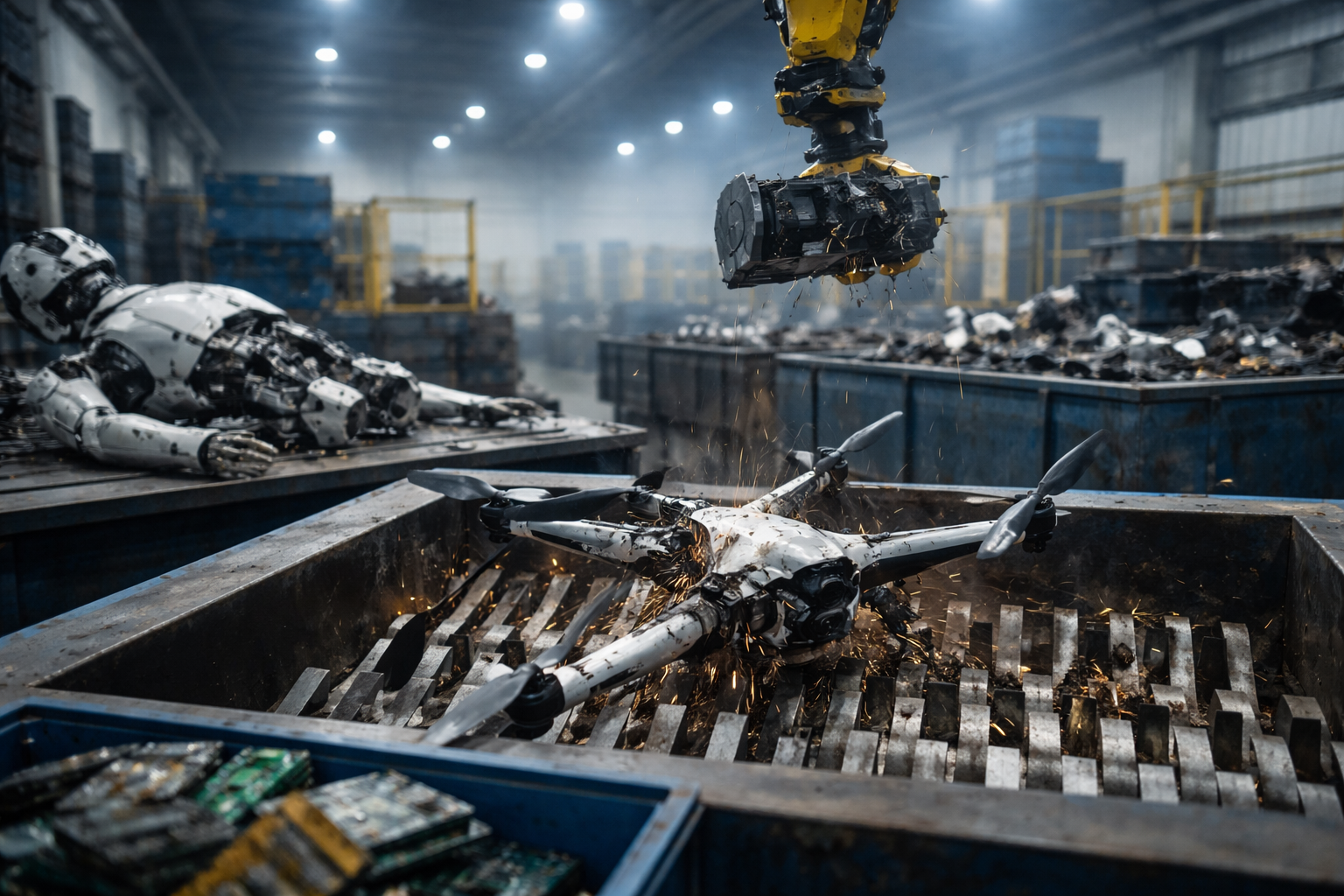
The rapid expansion of advanced technology has created a growing need for secure end-of-life hardware management. Drones, robotics systems, and engineering prototypes are now widely used across defense, manufacturing, logistics, and research sectors. While organizations prioritize innovation and production, the disposal and destruction of outdated or unused technology assets often receive less attention. These modern devices contain embedded memory, sensor logs, and proprietary engineering data that can expose sensitive business information if improperly discarded.
This article highlights why specialized destruction solutions for drones and prototypes are necessary to permanently destroy both physical components and stored digital information, preventing reconstruction, data recovery, and intellectual property exposure.
Unlike traditional scrap metal or outdated office equipment, drones and robotic systems are sophisticated ecosystems of technology.
A single commercial drone can contain high-resolution cameras, GPS tracking modules, onboard storage devices, encrypted communication systems, and proprietary firmware. Industrial robots often include programmable logic controllers, embedded software, network connectivity, and sensitive calibration data. Prototypes frequently house unreleased technology, confidential design elements and trade secrets.
When these devices are discarded without secure destruction, the risk is significant.
Recovered storage components can reveal operational data, flight paths, client locations, or proprietary algorithms. Salvaged parts may be reverse engineered. Competitors or bad actors can access sensitive information simply because a device was improperly decommissioned.
In industries such as defense, aerospace, and advanced manufacturing, this risk is real and increasingly urgent.
Intellectual property has become one of the most valuable assets for companies developing advanced technology. Prototypes and robotics systems often represent years of research, design work and financial investment. Even outdated or rejected models can reveal strategic insights if they are not securely destroyed.
Simply deleting files or performing a factory reset is not enough to eliminate sensitive information stored inside hardware. Drones, robots and prototypes may contain operational data, access credentials and confidential images. These can often be recovered from storage components unless they are physically destroyed.
Advanced technology equipment used in defense or government operations can expose critical strategic information if improperly discarded. Even partial components may reveal communication protocols, system capabilities, or material specifications, creating risks if recovered by unauthorized parties. Many government and defense organizations follow strict disposal and data protection standards set by agencies such as the National Institute of Standards and Technology. Compliance with security regulations and industry guidelines helps ensure that retired equipment does not become a national security vulnerability.
Drones, robots, and prototype devices often contain lithium batteries, circuit boards, and rare earth metals that require specialized handling during disposal. Improper processing can lead to environmental contamination and may violate regulatory standards set by agencies such as the United States Environmental Protection Agency. Organizations must follow proper recycling and waste management guidelines to ensure hazardous components are handled safely.
Secure destruction of drones, robots, and prototypes follows a controlled multi-step process designed to eliminate the possibility of data recovery or device reconstruction. It begins with the secure collection and transportation of hardware to a certified processing facility. Once received, the equipment undergoes mechanical shredding or disintegration using specialized industrial machines that reduce components into unrecoverable fragments.
Secure destruction goes beyond simple disposal. It plays a crucial role in protecting intellectual property, preventing data recovery, and maintaining regulatory compliance. Professional shredding services ensure that sensitive hardware is processed in a way that prevents reverse engineering of retired devices and prototypes. It reduces the risk of data breaches, supports audit readiness, and helps companies meet industry security standards. At the same time, it provides verifiable proof that sensitive assets have been permanently eliminated from circulation.
The rise of drones, robots, and prototype technologies has made innovation faster and more powerful, but it has also created new security challenges when these assets reach the end of their life cycle. Advanced devices often store sensitive data, proprietary designs, and operational information that can remain vulnerable if they are not properly destroyed. Secure destruction is now an essential part of protecting intellectual property, reducing compliance risks, and preventing potential data exposure after equipment retirement.
Organizations that rely on high-value technology should treat end-of-life security as a strategic priority. Viking Shred offers specialized IP and product destruction services that are engineered to eliminate sensitive assets while maintaining a strict chain of custody, compliance documentation, and controlled processing. Our on-site, millimeter-level shredding technology physically reduces hardware into extremely fine fragments to ensure that reconstruction or reverse engineering is virtually impossible.
If your business works with advanced technology assets, contact Viking Shred today to learn how secure destruction can protect your innovation and long-term security.

