

The Complete Guide to NAID Certification: What It Means & Why It Matters
This guide breaks down what NAID certification actually is, why the highest tier matters, and how to verify you're working with a legitimately certified partner.
Understanding the Standard That Protects Your Confidential Information
When you hand over boxes of documents or hard drives for destruction, you want one thing: absolute certainty that the information inside is irretrievably gone. That's where NAID certification comes in. But what exactly does NAID mean, and why should you care if your shredding company claims to have it?
This guide breaks down what NAID certification actually is, why the highest tier matters, and how to verify you're working with a legitimately certified partner.
What Is NAID?
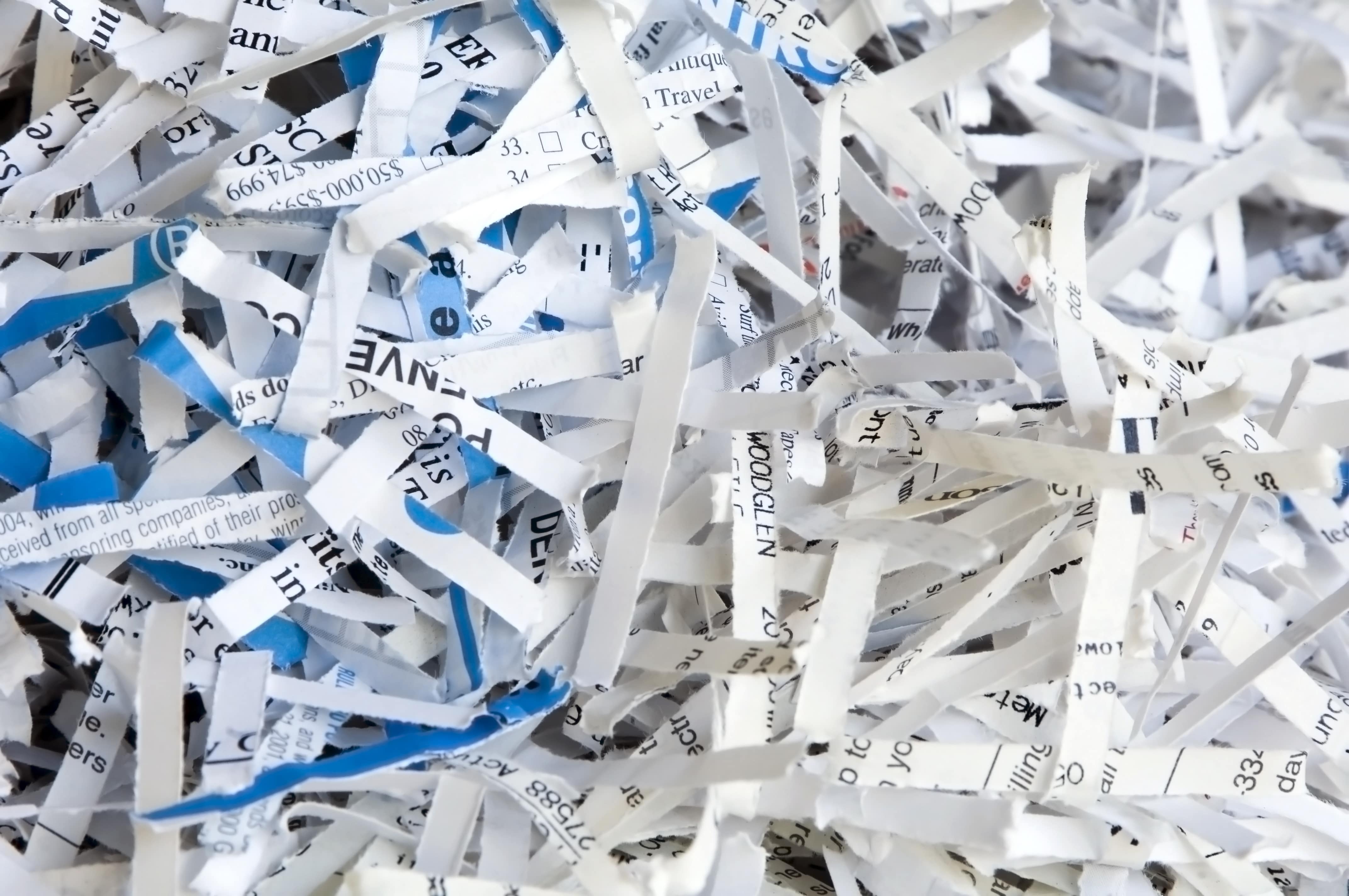
NAID stands for the National Association for Information Destruction. It's a nonprofit trade association founded in 1984 that sets standards for secure document and electronic media destruction.
Think of NAID like the health department for shredding companies. Just as restaurants are inspected and rated for food safety, destruction companies can be certified by NAID for following strict protocols around how confidential materials are handled, destroyed, and disposed of.
NAID's mission is straightforward: protect confidential information through certified destruction practices. Today, NAID has thousands of member companies worldwide, and collectively, those members destroy millions of pounds of sensitive documents and media annually—everything from tax returns to patient medical records to trade secrets.
But here's the key: not all destruction companies are NAID certified. In fact, certification requires meeting rigorous standards, submitting to annual audits, and maintaining detailed documentation. Many smaller operators skip this entirely.
Understanding NAID Certification Levels
Not all NAID certifications are equal. There are three tiers, and they matter.
NAID AAA Certification (Highest Tier)
This is the gold standard. NAID AAA certified companies have met the most stringent requirements and are subject to the most rigorous oversight.
What NAID AAA requires:
- Annual third-party audits – An independent auditor reviews the company's destruction practices, equipment maintenance, employee training, and documentation every single year.
- Equipment standards – Shredding machines must meet specific security specifications. Hard drive destruction must be verifiable (physical destruction, degaussing, or certified wiping).
- Employee background checks – Staff with access to confidential materials must pass background screening.
- Chain of custody protocols – Every document or drive must be tracked from pickup through destruction. Nothing gets lost in the process.
- Destruction certificates – Clients receive official documentation proving their materials were destroyed. These certificates can withstand legal and regulatory scrutiny.
- Employee training documentation – Staff must be trained on secure handling procedures, and training records must be maintained.
Why this matters: NAID AAA certification is expensive and demanding to maintain. Companies that hold it are serious about security.
NAID A Certification (Mid-Tier)
NAID A certified companies meet core security standards but are subject to less frequent audits (typically every 3 years instead of annually) and may have slightly less stringent requirements around certain practices.
It's still legitimate, but NAID AAA is more thorough.
Why AAA Is the Gold Standard
If NAID certification is the health inspection, NAID AAA is the five-star rating. The annual audits mean an independent firm is checking the company's work every single year. There's no hiding poor practices or cutting corners—because an outsider is verifying compliance regularly.
For companies dealing with highly sensitive information (law firms, healthcare providers, financial institutions), this difference matters. Regulators and auditors know NAID AAA means verified security.
What NAID AAA Certification Actually Requires: The Details
Let's get specific. Here's what a NAID AAA certified company must do to maintain their certification:
Annual Audits
Every year, an independent auditor shows up and reviews:
- Destruction logs (what was destroyed, when, by whom)
- Equipment maintenance records
- Employee training files
- Client contracts
- Destruction certificates issued
- Security protocols in place
The auditor samples client files, interviews employees, and inspects equipment. It's thorough and non-negotiable.
Equipment Specifications
For paper shredding:
- Machines must meet specific security levels (typically NSA or DIN standards)
- Cross-cut shredders produce particles smaller than single-pass machines
- Regular maintenance is documented
For hard drives and electronic media:
- Physical destruction must be verifiable (drives are pulverized, degaussed, or incinerated)
- Data wiping must use certified protocols (DOD standards, NIST guidelines)
- Certificates of destruction detail exactly what happened to each drive
Chain of Custody
Every piece of material that enters the destruction process is tracked:
- Pickup documentation (what was collected, from where, on what date)
- Transport logs (secure vehicles, locked containers)
- Destruction records (what was destroyed, how, when)
- Certificates issued to client
If you pick up 50 banker's boxes from a law firm, those 50 boxes are tracked individually through the entire process. No mixing, no shortcuts.
Client Confidentiality
NAID AAA companies sign strict confidentiality agreements. They can't discuss what materials they destroyed for you. They can't use your information for anything other than destruction. This is contractual and audited.
Employee Screening
People handling your confidential information must pass background checks. This isn't optional—it's a requirement. The reasoning is simple: you're entrusting them with your most sensitive information. Employers need to verify they're trustworthy.
Destruction Certificates
After destruction is complete, the client receives an official certificate. This certificate can include:
- Materials destroyed (weight, item count, types)
- Destruction method used
- Date of destruction
- Auditor signature (in many cases)
These certificates often satisfy regulatory requirements. A hospital can show regulators "We destroyed patient records in compliance with HIPAA." A law firm can prove "We destroyed case files securely." A financial institution can document "We destroyed customer data per federal standards."
NAID Certification vs. Other "Certified" Claims
Here's where things get murky. Many companies use the word "certified" when describing their destruction services. But not all certifications are the same.
"Certified by the State" or "Licensed"
Some states require destruction companies to be licensed or registered. This is a baseline requirement, not a mark of excellence. It's like having a business license—it proves you exist and operate legally, but it doesn't prove you follow rigorous security standards.
NAID is different. It's a rigorous third-party certification from a national trade association. The standards are higher, the audits are tougher, and the oversight is ongoing.
ISO Certifications
ISO 27001 (information security management) is a legitimate standard. Some companies hold both ISO and NAID certifications. But ISO is broader—it covers information security across an entire organization. It doesn't specifically focus on destruction practices.
If you're choosing between a company with ISO but no NAID and a company with NAID but no ISO, NAID is more relevant for destruction services.
Industry-Specific Certifications
Some industries have their own standards:
- Healthcare providers might pursue HIPAA compliance certifications
- Government contractors might seek DFARS (Defense Federal Acquisition Regulation Supplement) compliance
- Financial institutions might pursue other banking-specific standards
These are valuable within their industries, but they don't replace NAID. They often work alongside NAID.
Red Flags
Be wary if a company:
- Claims to be "certified" but can't show you a current certificate
- Says they're NAID certified but you can't find them in the NAID directory
- Provides no documentation of their destruction process
- Won't provide a destruction certificate for your records
- Refuses to answer questions about their audit history
Legitimate NAID AAA companies can confidently discuss their certification, show documentation, and explain their practices. If a company gets vague or defensive, that's a problem.
Which Industries Require NAID-Level Compliance?
NAID certification matters most in regulated industries. Here's why each cares:
Legal Firms
Law firms handle attorney-client privileged information. Even after a case closes, firms often must retain files for a specific period (typically 5+ years depending on state law). When that retention period ends, they have a responsibility to destroy files securely.
Why NAID matters: Courts expect law firms to demonstrate secure destruction. A NAID destruction certificate proves compliance. If records are later subpoenaed and a firm can't produce them, having documentation that they were professionally destroyed protects the firm.
Healthcare Providers & Hospitals
HIPAA (Health Insurance Portability and Accountability Act) requires covered entities to "implement policies and procedures that reasonably and appropriately safeguard patient information." That includes secure destruction of medical records.
Why NAID matters: When a hospital destroys 10 years of patient records, they need proof. NAID AAA destruction companies provide certificates that satisfy HIPAA audits. If a breach occurs and regulators investigate, the hospital can show "We destroyed old records per certified protocols."
Financial Institutions & Accounting Firms
Regulations like the Gramm-Leach-Bliley Act (GLBA) and FACTA (Fair and Accurate Credit Transactions Act) require financial institutions to securely destroy consumer financial information. Banks, credit unions, and accounting firms must prove they've done so.
Why NAID matters: Auditors and regulators expect documentation. NAID destruction certificates become part of the company's compliance file. They prove the company took reasonable steps to protect consumer data.
Government Contractors
Government agencies and contractors handling classified or sensitive information must follow specific destruction protocols. DoD (Department of Defense) contracts often specify NSA-compliant destruction methods.
Why NAID matters: Many NAID AAA companies specialize in government-level security. Their destruction methods meet NSA standards. Contractors can cite NAID AAA certification as proof of compliance with federal requirements.
Any Business Handling Sensitive Data
Even non-regulated industries benefit from NAID-certified destruction:
- Tech companies destroying prototype designs
- Manufacturing firms destroying product specifications
- Any company destroying customer data, financial records, or trade secrets
If the information could damage your business if disclosed, NAID-certified destruction is the professional choice.
The Cost of Working with Non-NAID Providers
Skipping NAID certification might seem like a cost-saving move. It usually isn't.
Legal Liability
If a non-certified company loses or fails to properly destroy documents, you could be liable. If those documents end up in someone else's hands and cause harm, regulators might argue you failed to take "reasonable steps" to protect the information.
NAID AAA certification proves you took reasonable steps. It becomes your defense.
Regulatory Fines
If you're subject to HIPAA, GLBA, FACTA, or other regulations and an audit discovers you didn't properly destroy records, the fines are substantial:
- HIPAA violations: $100–$50,000 per record, per incident. If a hospital loses track of how 1,000 patient records were destroyed, the potential fine is in the millions.
- FACTA violations: Up to $100–$1,000 per violation
- State-specific data privacy laws: Increasingly strict fines for improper destruction
Using a NAID AAA provider costs slightly more upfront. But if a breach happens and regulators investigate, that certification is worth far more than you saved.
Reputational Damage
If confidential information leaks because a destruction company failed, the damage to your reputation is severe. Clients lose trust. Media picks up the story. Your brand suffers.
NAID AAA companies have a strong incentive to do things right—their certification depends on it.
How to Verify NAID Certification: What to Ask

If a company claims to be NAID certified, here's how to verify:
1. Check the NAID Directory
Go to www.naidonline.org and search their member directory. Legitimate NAID members are listed with:
- Their certification level (AAA, A, or member-in-good-standing)
- Current certification status
- Location and contact information
If a company claims NAID certification but isn't in the directory, they're lying.
2. Ask to See the Certificate
Current NAID certification should be recent (within the past year). Ask the company to show you:
- Their current NAID certificate
- The expiration date
- Their certification level
If they're hesitant or can't produce it, that's a red flag.
3. Ask About Their Latest Audit
NAID AAA companies are audited annually. Ask:
- "When was your last NAID audit?"
- "What did the audit cover?"
- "Are there any findings or corrective actions?"
Reputable companies discuss this openly. If they get vague, move on.
4. Request References
Ask for references from clients in your industry:
- A law firm, healthcare provider, or financial institution they've worked with
- Contact them directly (not just names the company provides)
- Ask about their experience with chain of custody, documentation, and destruction certificates
5. Understand Their Destruction Methods
Ask specifically:
- "What method do you use for hard drive destruction?" (Physical destruction, degaussing, certified wiping, or some combination?)
- "For paper, what shredder specs do you use?" (Cross-cut, NSA-level, DIN-level?)
- "Can you provide certificates of destruction?" (What information is included?)
Knowledgeable companies have detailed answers.
Real-World Impact: A Case Study
Consider a scenario that happens more often than most companies realize:
The situation: A law firm has been storing case files for 8 years. Partner contracts require retention for 7 years. The files are now eligible for destruction. The firm has thousands of boxes—decades of cases, client communications, financial records.
Without NAID: The firm contracts with a general waste disposal company that offers "document destruction." The company shreds the boxes and charges $2,000. No audit, no certificates, no verification. Files are destroyed, and the firm moves on.
The problem: Five years later, a former client is involved in litigation and subpoenas the law firm's case files. The firm can't produce them—they were destroyed. The court asks: "How do you know they were properly destroyed?" The firm has no documentation. The court is skeptical. The opposing attorney argues the firm destroyed evidence. A legal nightmare ensues.
With NAID: The firm contracts with a NAID AAA certified destruction company. The company provides:
- Pickup documentation (date, weight, item count)
- Chain of custody logs
- Destruction certificates signed by an auditor
- Detailed records of what was destroyed and how
If the same subpoena comes five years later, the firm can produce the destruction certificate. They have proof—verified by a third party—that the records were professionally and securely destroyed. The court is satisfied. The firm is protected.
The difference? NAID AAA certification cost perhaps $200–500 more. But it provided legal protection worth far more.
What This Means for Your Business
If you're responsible for destroying confidential information, here's your takeaway:
Hiring a NAID AAA certified company isn't an optional upgrade. It's due diligence.
Whether you're a law firm, healthcare provider, financial institution, or any business handling sensitive data, using a certified partner protects you in multiple ways:
- Regulatory compliance: You've done what regulators expect. Audits are easier.
- Legal protection: You have documented proof of proper destruction. Litigation is defensible.
- Risk mitigation: You've shifted responsibility to a certified professional. Liability is reduced.
- Peace of mind: You know your confidential information was destroyed securely, not just moved to a landfill.
The cost difference is minimal. The protection is substantial.
Ready to Move to a NAID AAA Certified Partner?
If you currently work with an unverified destruction company—or if you're not sure whether your current provider is actually certified—now is the time to audit your process.
Here's what to do:
- Check whether your current provider is NAID certified (search the directory)
- If not, or if you're unsure, contact a certified company for a consultation
- Discuss your specific needs (volume, type of material, retention timeline, regulatory requirements)
- Get a quote and compare the cost difference
- Plan a transition schedule so you don't disrupt your current workflow
The investment in certified destruction is one of the easiest risk-mitigation decisions your business can make.
Get a custom quote from a NAID AAA certified partner. We'll help you understand your destruction needs and provide documentation that satisfies regulatory requirements.
Key Takeaways
- NAID stands for National Association for Information Destruction – a legitimate trade association setting standards for secure destruction
- NAID AAA is the highest certification tier, requiring annual audits and rigorous security protocols
- NAID certification isn't optional for regulated industries – it's expected by regulators, auditors, and courts
- Destruction certificates provide legal protection – you have proof that materials were securely destroyed
- The cost difference is minimal – but the risk mitigation is substantial
- You can verify certification – check the NAID directory and ask for recent certificates
- Non-NAID providers expose you to liability – fines, legal risk, and reputational damage
When it comes to your confidential information, NAID AAA certification isn't a luxury. It's due diligence.
Questions? We're Here to Help
Do you have questions about NAID certification, destruction timelines, or compliance requirements specific to your industry? We specialize in helping law firms, healt
...[markdown truncated: showing 20,000 of 20,315 characters. Request a narrower target if you need the rest.]