
What is Chain of Custody in Shredding & How It Protects Businesses from Liability
Learn how the chain of custody in shredding helps protect sensitive information, reduce liability, and support secure document disposal for businesses.
If your business handles documents with customer data, employee records, financial details, or protected health information, secure shredding is not just a cleanup task. It is part of your risk management process. A documented chain of custody helps show where sensitive materials were, who handled them, and how they were destroyed. That matters because when records are lost, exposed, or discarded improperly, the result can be more than inconvenience. It can mean legal exposure, compliance problems, and damage to trust.
What Chain of Custody Means in the Shredding Process
Chain of custody refers to the documented timeline that shows who handled your files from the moment they leave your control until they are destroyed. It is a clear record that answers questions such as:
- Who collected the documents?
- Who transported them?
- When and where were they stored?
- When were they shredded?
- Who witnessed the destruction?
This record provides transparency and accountability. In legal or regulatory situations, a clear chain of custody demonstrates that your organization acted responsibly and followed accepted procedures.
Why Chain of Custody Matters for Liability Protection
Many organizations think the main risk is keeping too much paper. In reality, one of the biggest risks is losing control of it during disposal.
If confidential records are left in an unlocked area, tossed into a dumpster, carried off without documentation, or destroyed by an unverified vendor, your business may still be responsible if that information is exposed.
A documented chain of custody helps your organization:
- show that disposal was handled intentionally, not casually
- reduce the chance of unauthorized access during the disposal process
- maintain records of service and destruction
- support internal policies for retention and destruction
- demonstrate due diligence if questions arise later
Regulatory bodies like the Federal Trade Commission enforce the Disposal of Consumer Report Information and Records, which requires businesses to take reasonable measures to protect against unauthorized access. In healthcare, the U.S. Department of Health and Human Services oversees HIPAA requirements, which mandate secure handling and disposal of protected health information. Financial institutions are also subject to safeguards under laws like the Gramm-Leach-Bliley Act, which emphasize data protection throughout its lifecycle.
Core Components of a Strong Chain of Custody for Document Destruction
A secure chain of custody process includes several key steps. Each step adds a layer of protection and documentation so you can prove that sensitive information was handled correctly.
1. Secure Collection
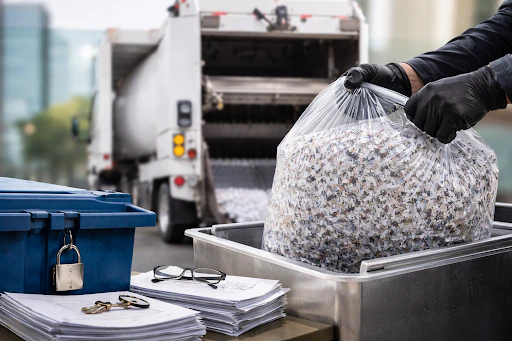
The process begins with secure collection at your location. Ideally, this involves locked bins or consoles where employees can deposit sensitive files. These containers prevent unauthorized access and keep documents safe until pickup. Only authorized staff should have access to these containers, so you can account for who may interact with the records before pickup.
2. Documentation Before Pickup
Before shredding professionals arrive, the shredding provider should inventory what needs to be destroyed. This often involves a form or checklist that notes the volume and type of materials to be collected. This record is your first piece of chain of custody documentation.
3. Supervised Pickup and Verification
When the shredding company arrives, they should verify the inventory and confirm that the materials match the documentation. An assigned personnel from your organization should witness this step and sign the paperwork. Having a witness reduces the risk of discrepancies later.
4. Secure Transportation
Once collected, the materials are transported in a locked vehicle back to the shredding facility. Secure vehicles are designed to prevent access to the contents at all times. Reliable shredding companies use sealed trucks or locked containers so documents cannot be lost or tampered with in transit.
5. Facility Intake Logging
At the shredding facility, the materials are logged into a tracking system. Each batch is assigned an identifier so its destruction can be traced back to the original pickup. This step is critical because it connects the pickup event to the actual destruction event.
6. Verified Destruction
Once shredded, the provider should issue a certificate of destruction, which serves as documented proof within the chain of custody process. This certificate typically includes:
- The date of destruction,
- A description of the materials destroyed,
- The method used,
- The signature of the shredding provider.
A certificate of destruction becomes your legal proof that the materials were properly destroyed.
7. Record Retention
Good practice is to keep a chain of custody records on file for several years after the document and media destruction. Many industries have specific retention requirements, so you should check what applies to your organization. Keeping these records organized and accessible helps if you are audited or asked to verify compliance.
Protect Your Business with a Secure Shredding Process
When secure shredding is handled with a documented chain of custody, it does more than clear out old records. It helps protect your business from unnecessary risk, supports compliance efforts, and gives you confidence that sensitive materials are destroyed the right way. That is exactly why organizations across Northern California turn to Viking Shred for secure destruction services, including on-site and off-site shredding, verified handling, and Certificates of Destruction.
If you want a shredding partner that helps you stay secure, compliant, and accountable from pickup through final destruction, contact our team today to discuss the right solution for your business.